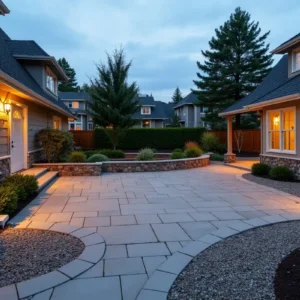
Buying a home in Connecticut means choosing a daily routine as much as choosing a property. A house can be updated, but its commute, tax structure, road access, nearby services, and neighborhood setting remain central to the experience of living there. For buyers researching Newtown and nearby Fairfield County communities, Newtown, CT real estate experts Around Town Real Estate offer home-search tools, property valuation resources, and community information.
Around Town Real Estate has deep local roots in Newtown and experience across areas including Sandy Hook, Bethel, Redding, Danbury, Southbury, and other Connecticut markets, making its local perspective useful when comparing recent sales, housing styles, and town-by-town conditions.
The best fit may be a village-centered neighborhood, a wooded road with more privacy, a home near a rail option, or a property with quick access to major routes. Start by comparing communities before becoming attached to a kitchen, deck, or finished basement.
Why Town Choice Matters As Much As the Home
Two similarly priced homes can create entirely different weekly schedules. One may offer a larger lot, but add travel time to work, school, grocery stores, or medical appointments. Another may be closer to services and social activity but have less space, more road noise, or a different housing style.
Consider a buyer deciding between a larger home on a quiet rural road and a smaller home nearer Newtown center. After driving both routes during the morning and evening, the buyer may decide that convenience outweighs extra square footage. That is not a universal answer. It is a reminder that a beautiful home can still be a poor fit when its location adds avoidable stress.
Set Priorities Before Comparing Communities
Create a short list of true requirements before scheduling tours. Separate needs from preferences so that an attractive feature does not distract from a deal-breaking issue.
Start With These Questions
- What purchase price and monthly payment feel comfortable?
- What is the maximum acceptable commute time?
- Do you need a certain number of bedrooms, acreage, or home layout?
- How close should highways, rail stations, childcare, shopping, and health care be?
- Are public water and sewer important, or are you comfortable maintaining a well and septic system?
- Which matters more: walkability, privacy, recreation, community events, or access to family?
Compare the Full Cost of Ownership
The listing price is only the entry point. Estimate a likely monthly and annual cost for each town, including mortgage principal and interest, property taxes, insurance, utilities, routine maintenance, landscaping, snow removal, and travel costs. A home with a lower price may require more spending on heating, deferred repairs, private systems, or a longer drive.
Property taxes deserve careful attention. In Connecticut, a mill represents one dollar of tax for every $1,000 of assessed value, and the tax calculation uses the property assessment and local mill rate. The state publishes Connecticut mill rate information, but buyers should still confirm the current tax bill, assessment, exemptions, and any district charges with the appropriate town offices.
Review Local Housing Market Data
Do not judge a community from one listing or a statewide headline. Review recent closed sales that resemble the homes you may buy, then compare those results with current inventory. Focus on home type, condition, lot characteristics, school or commuting considerations, and price range rather than treating a townwide median as a valuation for a specific property.
Useful Details to Compare
- Recent sale prices and sale-to-list-price patterns
- Active listings in your intended price range
- Typical days on market for comparable homes
- Price reductions and homes that returned to the market
- New construction, renovations, and the supply of older homes
- Differences between neighborhoods within the same town
Study Commutes, Services, and Daily Life
Lifestyle fit is personal. Test the routes you will actually use, including school drop-off, grocery trips, weekend activities, and travel to frequent destinations. A 15-minute increase each way can equal about 125 additional hours in the car over 250 commuting days.
Look beyond drive time. Compare access to pharmacies, parks, libraries, restaurants, medical offices, trails, public transportation, dependable internet service, and cell coverage. Also consider seasonal conditions. A road that feels peaceful on a sunny afternoon may feel very different during snow, leaf season, school traffic, or a rainy evening.
Visit Each Community More Than Once
A single showing rarely gives a complete picture. Visit short-listed areas on a weekday morning, after school, and during the evening rush. Drive nearby streets without focusing exclusively on the listing, stop at a local store or park, and listen for rail, commercial, road, or neighborhood noise. If possible, revisit after dark to understand lighting, visibility, and the general feel of the route home.
Build a Simple Town Scorecard
Rate each community from one to five using the same categories. The goal is not to make a decision mechanically. It is to make trade-offs visible before emotion takes over.
- Budget: Does the all-in monthly cost fit comfortably?
- Commute: Is the travel time manageable for the household?
- Housing choice: Are there enough suitable homes to create options?
- Taxes and services: Do local costs align with your needs?
- Lifestyle: Does the area support everyday habits and interests?
- Future plans: Could the location still work after a job, family, or lifestyle change?
- Resale: Would the property likely appeal to a broad group of future buyers?
Questions To Ask Before Making an Offer
- What have similar homes sold for recently?
- Are there zoning, permit, boundary, easement, or conservation considerations?
- Does the property use public utilities, a well, a septic system, or a private road?
- Are association, lake, shared driveway, or maintenance fees involved?
- What inspections are appropriate for the home, systems, and location?
- Are nearby development, road, school, or commercial projects planned?
Final Checklist for Connecticut Buyers
Choose three to five communities, set an all-in budget, review recent sales, test realistic commutes, and visit each area more than once. Once you identify the best-fit town, research the specific property with the same care. The right Connecticut home is not necessarily the largest or least expensive option. It is the one that supports your finances, schedule, lifestyle, and future plans.