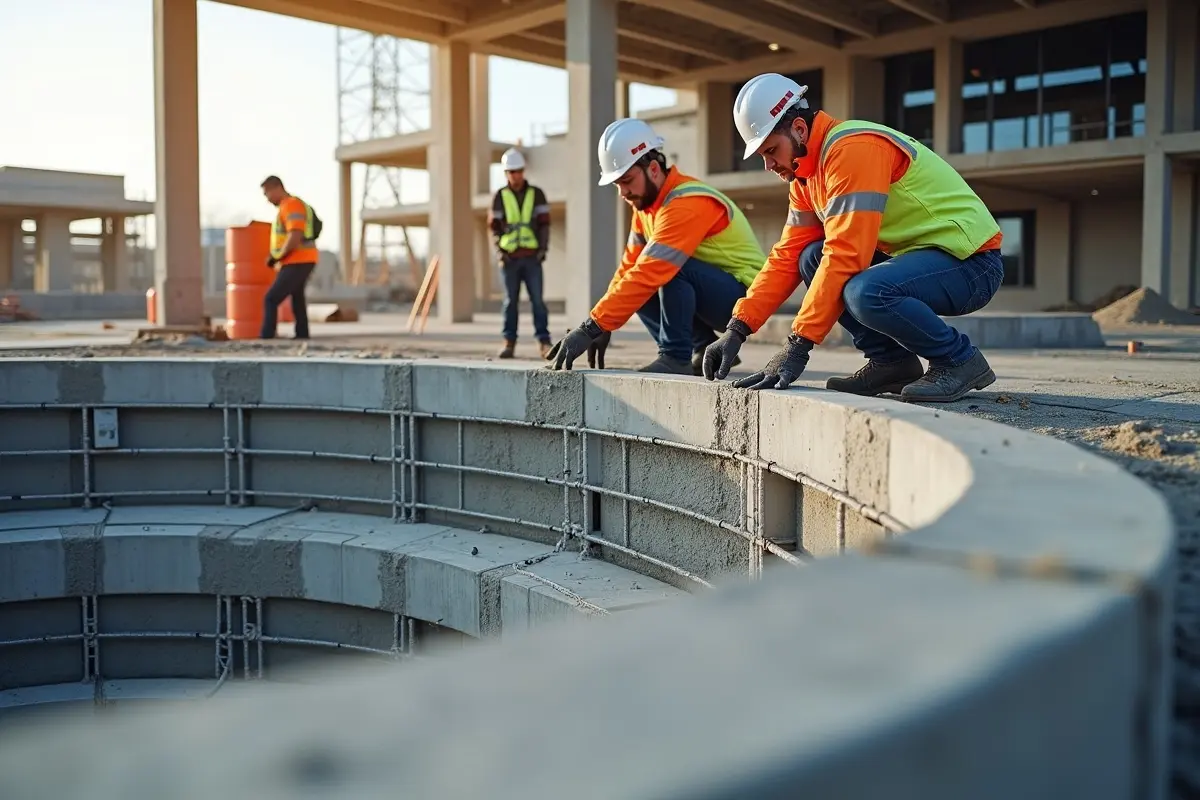
Every strong concrete structure relies on proper reinforcement. Wire mesh and rebar add vital strength to slabs and foundations. But simply having these materials is not enough. Their precise placement within the concrete is key to long-term durability.
This is where concrete mesh chairs become essential. These small, often-overlooked supports ensure that reinforcement stays exactly where it needs to be. They prevent the mesh from sinking to the bottom during a pour. This proper positioning is critical for the concrete’s strength and crack resistance.
In this extensive guide, we will explore everything about concrete mesh chairs. We will look at their primary purpose and how they differ from other supports. We will cover the materials they are made from and how to choose the right size. We will also discuss best practices for installation and common mistakes to avoid. Understanding these vital components, such as the reliable Hercules concrete construction mesh chairs used in many projects, helps us build safer and more durable concrete structures.
The history of concrete construction is a story of continuous innovation, driven by the quest for greater strength, durability, and efficiency. Early concrete structures, while robust for their time, often relied on simpler reinforcement methods. For instance, the practice of manually lifting wire mesh during a concrete pour was once common.
Workers would use hooks or their feet to pull the mesh up into what they hoped was the mslab’s middle. This method, however, was fraught with inconsistencies. The mesh would often sink back down, or workers’ movements would push it to the bottom, leaving the concrete vulnerable to cracking and reduced load-bearing capacity.
As engineering principles advanced and the demands for structural longevity increased, particularly in high-rise buildings and large-scale infrastructure projects, the need for more precise reinforcement placement became undeniable. Modern durability standards require that steel reinforcement be accurately positioned within the concrete matrix to achieve its full potential. This precision ensures that the steel effectively resists tensile forces, distributes loads evenly, and protects against environmental factors such as corrosion.
The shift from rudimentary, manual techniques to engineered solutions reflects a broader evolution in concrete construction, in which every component, no matter how small, plays a critical role in the structure’s overall integrity and performance. This emphasis on engineering precision is what underpins the incredible strength and resilience of today’s concrete marvels.
Contents
Structural Integrity through Precision Reinforcement Support
The primary purpose of concrete mesh chairs is to ensure that the wire mesh reinforcement is held at the correct height within a concrete slab. This precise positioning is crucial for achieving the intended structural integrity of the concrete. When mesh is too close to the surface, it offers little tensile strength and is susceptible to corrosion.
If it rests on the bottom, it cannot effectively resist the tensile stresses that cause cracking, rendering it largely useless. Mesh chairs create what is known as “concrete cover”—the depth of concrete above and below the reinforcement. Proper concrete cover protects the steel from moisture, chemicals, and fire, while also allowing the steel to work in conjunction with the concrete to resist various forces.
While both mesh chairs and rebar chairs serve to elevate reinforcement, they are designed for different types of materials and applications. Mesh chairs are specifically engineered to support welded wire mesh, often featuring clips or grooves that securely hold the mesh wires in place.
Rebar chairs, on the other hand, are typically designed with cradles or slots to accommodate individual rebar bars of various diameters. Both are indispensable for proper reinforcement, but their specific designs cater to the unique characteristics of the materials they support. For a comprehensive overview of how these supports elevate your slab with concrete mesh chairs, understanding their distinct applications is key.
Here’s a comparison to highlight their differences:
| Feature | Concrete Mesh Chairs | Standard Rebar Chairs |
| Reinforcement Type | Welded wire mesh (sheets or rolls) | Individual rebar bars (e.g., #3, #4, #5) |
| Design | Often feature clips, grooves, or wide bases for mesh | Cradles, slots, or cages for single bars |
| Primary Use | Slab-on-grade, driveways, patios, sidewalks | Beams, columns, footings, thick slabs, double mats |
| Spacing | More frequent, often at wire intersections | Less frequent, supports individual rebar runs |
| Material | Plastic, steel | Plastic, steel, concrete (dobies) |
| Load Bearing | Designed for lighter, distributed loads of mesh | Designed for heavier, concentrated rebar loads |
Selecting the right concrete mesh chair involves understanding several critical specifications, primarily driven by the slab thickness and the desired concrete cover. The goal is to position the wire mesh in the upper third to the middle of the slab, ensuring it is most effective at resisting tensile forces. For instance, in a 4-inch thick slab, a 1.5-inch to 2-inch chair would typically be used to achieve adequate cover.
Mesh chairs are available in a wide range of heights, commonly from 3/4 inch up to 6 inches, to accommodate various slab depths and project requirements. When considering options like the Hercules 2-inch steel mesh chair product 944, it’s important to note its overall height of 2-3/8 inches, which provides a 2-inch lift for the mesh.
These chairs are specifically designed to be compatible with common mesh gauges, such as 6, 8, and 10 gauge steel wire. This compatibility ensures a secure fit, preventing the mesh from dislodging during the concrete pour. Engineers and contractors must carefully match the chair height to the slab’s specifications to guarantee the reinforcement performs as intended, contributing to the long-term strength and crack resistance of the concrete.
Material Innovations: Plastic vs. Steel Mesh Chairs
The choice of material for concrete mesh chairs is a significant factor in their performance, durability, and suitability for different construction environments. The two primary materials are plastic and steel, each offering distinct advantages.
Plastic Mesh Chairs
Plastic chairs are typically made from durable, non-corrosive materials like polypropylene. This makes them an excellent choice for applications where corrosion resistance is paramount, such as in environments with high moisture, exposure to de-icing salts, or in marine structures. Their non-conductive nature also makes them suitable for certain electrical applications. Plastic chairs often feature wide circular bases, which provide excellent stability on various subgrade surfaces, preventing them from sinking into soft ground.
Many designs incorporate snap-in tops that securely hold the wire mesh, allowing the mesh panels to move slightly without the chairs falling off. Some plastic chairs even offer two placement options per chair, providing flexibility for uneven surfaces. They are lightweight, easy to handle, and generally more cost-effective for many residential and light commercial projects.
Steel Mesh Chairs
Steel mesh chairs, on the other hand, are prized for their high strength and rigidity. They are often constructed from heavy-gauge steel wire, providing robust support for heavier mesh or in situations where greater load-bearing capacity is required before and during the pour. Steel chairs are particularly effective in resisting the forces exerted by workers moving across the mesh or by the weight of the wet concrete. They are designed to allow concrete to flow freely underneath the mesh, ensuring a complete bond.
While steel chairs are highly durable, they must be properly galvanized or coated if used in corrosive environments to prevent rust bleed-through to the concrete surface. The 2-inch steel-mesh chairs, for example, are specifically designed to support 6-, 8-, and 10-gauge steel wire, ensuring a precise fit and reliable elevation.
The decision between plastic and steel often comes down to project-specific requirements, including environmental conditions, reinforcement weight, and budget. Both materials represent significant innovations over rudimentary support methods, providing engineered solutions for precise reinforcement placement.
Installation Protocols and Code Compliance
Proper installation of concrete mesh chairs is as crucial as selecting the right type and size. Adhering to recommended spacing and placement protocols ensures that the wire mesh effectively reinforces the entire slab. A common guideline, for instance, recommends placing a chair approximately every 24 inches in each direction under the wire mesh.
This systematic placement creates a stable grid that can withstand the forces of concrete pouring and worker movement. For a typical 1800 sq. ft. garage slab (32’x56′), this standard spacing would require approximately 900 chairs, highlighting the sheer volume needed for even moderately sized projects.
The strategic placement of chairs also addresses the practical challenge of “walkability” on the mesh. With chairs properly installed, the mesh retains its position, and any temporary depression caused by foot traffic tends to spring back into place, maintaining the critical concrete cover. This contrasts sharply with the outdated and unreliable practice of manually lifting the mesh during the pour.
Manually lifting often pushes the mesh to the bottom of the slab, either by workers or by the screeding process, leading to what engineers refer to as “ghosting” cracks and significantly reduced structural integrity. This is why engineers and building codes increasingly mandate the use of chairs, as they provide a consistent, verifiable method for reinforcement placement, mitigating the risk of costly core test failures that reveal improperly placed steel.
Regarding DIY alternatives, while some may be tempted to use items such as PVC pipe slices, broken bricks, or even beer cans as spacers, these methods pose significant risks and are often not code-compliant. For example, red clay bricks are generally prohibited because they can absorb moisture and crumble over time, leaving voids within the concrete and compromising its integrity. Only gray bricks, if approved by local codes, might be considered.
PVC pipe, if not properly filled with concrete, can create weak points or pathways for water. Commercial mesh chairs, whether plastic or steel, are engineered for specific load-bearing capacities, material compatibility with concrete, and consistent height, ensuring the long-term performance of the slab. Avoiding these common mistakes, such as using improper materials or neglecting proper spacing, is vital for the durability and safety of any concrete structure.
Future Trends in Concrete Construction Engineering
Innovation in concrete reinforcement supports continues, with advanced designs catering to more complex structural requirements. Two notable advancements are continuous mesh chairs and stackable caged chairs, which address the needs of elevated slabs, double-mat reinforcement, and multi-layer support systems.
Continuous Mesh Chairs: Products like OCM Continuous Mesh Chairs are commercial-grade metal bar supports manufactured in 60-inch lengths. These chairs are designed for efficiency in large-scale projects, providing a continuous line of support for reinforcing steel. They are available in a wide range of heights, from 3/4 inch to 8 inches in 1/4-inch increments, allowing for precise elevation control.
Their compliance with industry standards, such as ASTM A82/82M for wire material and CRSI (Concrete Reinforcing Steel Institute) standards, ensures they meet stringent quality and performance criteria for commercial applications like elevated decks, footings, and bridge decks.
Stackable Caged Chairs
For projects requiring multiple layers of reinforcement, such as double-mat systems or tilt-up applications, stackable caged chairs offer a versatile solution. LTM Caged Chairs, for instance, are designed to be stacked, allowing rebar to be positioned at various heights without custom fabrication. Each unit can support rebar at its stated height and often at a 1/2-inch lower position (e.g., a 2-inch chair can hold rebar at 1.5 inches and 2 inches), providing flexibility for dual cover support.
These chairs typically feature wide-set legs for stability, meeting Department of Transportation (DOT) specifications, and large cavities to ensure proper concrete flow around the spacers. Made from durable polypropylene, they are lightweight, non-corrosive, and simplify the complex task of multi-layer reinforcement. These innovations streamline the construction process, enhance structural integrity, and meet the evolving demands of modern concrete engineering.
Frequently Asked Questions about Concrete Reinforcement
Why are commercial chairs preferred over DIY alternatives like PVC or bricks?
Commercial concrete mesh chairs are engineered specifically for their purpose, offering consistent height, stability, and material compatibility with concrete. DIY alternatives, such as PVC pipe slices, broken bricks, or even beer cans, often fall short of these critical requirements. For instance, red clay bricks are typically not allowed by building codes because they can absorb moisture, leading to expansion and contraction that causes them to crumble and create voids within the concrete.
PVC pipe, if not filled with concrete, can create weak points or pathways for water ingress. Commercial chairs, whether plastic or steel, are designed to withstand the weight of the mesh and the concrete, ensure proper concrete flow, and maintain their integrity over time, thus guaranteeing the long-term performance and safety of the slab.
How do you determine the correct chair height for a residential garage slab?
The correct chair height is determined by the required “concrete cover,” which refers to the depth of concrete above and below the reinforcement. For most residential garage slabs, the goal is to place the wire mesh in the lower third of the slab’s thickness, centered on the slab’s thickness. For a standard 4-inch thick garage slab, chairs providing a 1.5-inch to 2-inch lift are typically used.
This ensures that the mesh is optimally positioned to resist tensile forces and is adequately protected from corrosion. Always consult local building codes and engineering specifications for precise cover requirements, as these can vary based on slab thickness, soil conditions, and intended use.
What is the risk of “hooking” or manually lifting mesh during a pour?
The practice of “hooking” or manually lifting wire mesh during a concrete pour poses a significant risk to the slab’s structural integrity. While it might seem like a quick solution, it is highly unreliable. As workers move across the slab and concrete is placed and screeded, the mesh inevitably gets pushed down, often resting directly on the subgrade. When the reinforcement is at the bottom of the slab, it cannot effectively resist the tensile stresses that cause cracking, rendering it largely ineffective.
This improper placement can lead to “ghosting” cracks on the surface and significantly reduce the slab’s load-bearing capacity and overall durability. Engineers and building codes strongly advise against this method, advocating the consistent, precise placement of concrete mesh chairs to ensure the reinforcement is exactly where it needs to be.
Conclusion
In the intricate world of concrete construction, the seemingly small detail of reinforcement positioning holds immense significance. Concrete mesh chairs are not merely accessories; they are fundamental components that ensure the long-term durability, structural safety, and performance of concrete slabs. By consistently elevating wire mesh to its optimal position, these chairs guarantee proper concrete cover, protecting the steel from corrosion and enabling it to resist tensile forces effectively.
Adhering to engineering best practices, such as proper chair selection, spacing, and avoiding unreliable DIY alternatives, is paramount. Innovations such as continuous and stackable chairs further enhance project efficiency and enable complex multi-layer reinforcement systems.
The meticulous use of concrete mesh chairs reflects a commitment to structural integrity, transforming a basic pour into a resilient, long-lasting foundation. Investing in these essential supports is an investment in the overall quality and safety of any concrete project. To explore the range of solutions available for your next project, consider visiting leading suppliers in the industry.